“When I came into the work, I quickly learned that all the groups were not really working together; we were actually making work harder on each other.”
– David Butler, Cahaba River Coalition
Rivers of Life
Waterkeeper Network Safeguards Alabama’s Rich Waterways
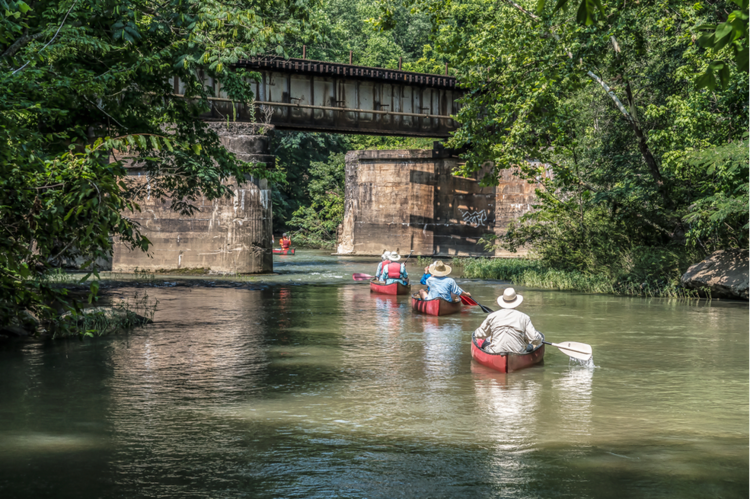
Alabama leads the nation in freshwater biodiversity, and an estimated one tenth of the freshwater in the United States originates in or flows through the state. Its vast network of streams, rivers, and lakes is home to nearly 40 percent of North America’s fish species – more than 300 in all – as well as turtles, mussels, crayfish, snails, and more. In addition to their ecological value, these waterways and their watersheds support fishing, farming and ranching, tourism, and other economic drivers, and provide drinking water for millions of people. Yet the state has taken a hands-off approach to environmental monitoring and regulation, leaving citizen riverkeeper groups as the waterways’ primary guardians.
“State agencies have very little incentive to do proactive work,” said David Butler, Executive Director of the Cahaba River Coalition, one of the leading riverkeepers in the state. “We do less research in Alabama than almost anyplace else. We don’t even have a full inventory of what’s here.”
Butler and his colleagues at Cahaba and other riverkeeper groups across the state are working to fill the gaps, collecting and publishing water quality data, training citizen scientists, recruiting biologists to do research, and even negotiating with nearby polluting industries to implement protections in the absence of state regulation.
Until recently, however, these efforts were siloed and haphazard, with each group operating largely in isolation and with widely varying capacity. Even after they formed Waterkeepers Alabama in 2018 improve connectivity, they had little time and few resources to collaborate effectively.
“When I came into the work,” recalled Butler, “I quickly learned that all the groups were not really working together; we were actually making work harder on each other. We were talking to the same donors, proposing different projects for the same watershed. It was so competitive to get funding.”
Their advocacy work suffered too. “We tried a couple of statewide policy initiatives where we collectively pursued sewage overflow notification, for example. The more we got into it, the more groups we lost. There was no energy for sustaining a long-term campaign.”
Seeds of Collaboration
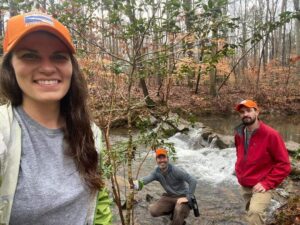
That all began to shift in 2021 when three Birmingham-based riverkeepers – Cahaba, Coosa Riverkeeper, and Black Warrior Riverkeeper – joined forces to win a grant from Mosaic to turn their loose network into a strategic collaboration. With dedicated funds to meet, visit each other’s rivers, and share data, they were able to identify common challenges and priorities and collaborate on region-wide education and outreach, including engagement with the region’s Historically Black Colleges and Universities to recruit and cultivate more diverse interns, staff, and leadership.
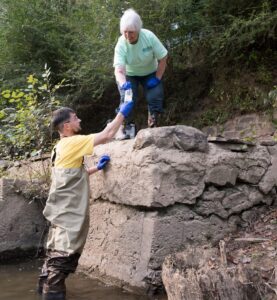
The collaboration quickly grew from three riverkeepers to the full membership of Waterkeepers Alabama, formalizing it as an umbrella for ten riverkeepers covering almost every corner of the state. In 2024, the alliance won a grant from the Water Foundation to build out a set of ArcGIS maps for each watershed with accessible water quality data for scientists, advocates, fisherfolk, and recreational river users that also layered on environmental data related to new federal climate and environmental justice policies.
Governed by a leadership council of its members, Waterkeepers Alabama is now a state-wide force for water quality and river protection and a trusted source of information for the public. Its members share expertise and equipment, collaborate on projects and funding applications, and participate in joint advocacy with state policymakers and industry.
Flexing Collective Power
In 2025, after years of effort, they successfully petitioned the state to update standards for 12 different toxins. The win was short-lived – undone by a new law preventing state agencies from implementing regulations that exceed or fill gaps in federal protections – but nonetheless reinforced for members their growing collective power. By working together they have expanded their reach, elevated issues of water quality and biodiversity with ordinary Alabamans, and deepened their impact at the local and state level.
“The grants gave us the opportunity to apply for bigger grants, do bigger projects, and look at the bigger picture,” said Butler. “At Cahaba, we have $13.5 million in projects just in one community. We restored an abandoned mine on a national wildlife refuge, are renovating an old theater to be a watershed center, and are building a campground. We’re helping the community understand the economic opportunity the river offers. All of these projects are the outcome of having resources to sit down strategically and talk to other riverkeepers and see what’s been successful.”
Their work together has also rippled across the region.
“As a riverkeeper in the neighboring state of Georgia, watching the transformation in strength and networking in Alabama has been beyond inspiring,” said Tonya Bonitatibus, Executive Director of Savannah Riverkeeper and member of the Mosaic Leadership Council. “Because of their openness and willingness to share, many of the initiatives and projects created in Alabama have been taken up by other keepers throughout the Southeast and beyond.”